On 25 June 2021, the Supreme Court handed down its judgment in what is being hailed in activist circles as a landmark case for protest rights in the United Kingdom. Director of Public Prosecutions v Ziegler and Ors [2021] UKSC 23; [2021] 3 WLR 179 arose out of a protest against the biennial Defence and Security International (DSEI) arms fair at the Excel centre in East London. The appellant protesters had sought to disrupt deliveries to the site by lying down in the middle of the dual carriageway leading to the Excel centre. They were charged with wilful obstruction of a highway, without lawful authority or excuse, under of Section 137 of the Highways Act 1980, but were acquitted at trial. The DPP successfully appealed to the Divisional Court but that decision was itself overturned by the majority of the Supreme Court in June.
How did a seemingly routine protest case prove so difficult to resolve? And is the excitement with which many activists have greeted the judgment justified or misplaced?
Notwithstanding the relative simplicity of the facts of the case, the Ziegler judgment dealt with some complex and important points of law around obstructive protests. The main considerations for the Supreme Court were: 1) what test should be applied by appellate courts to an assessment of the decision of the trial court in respect of a statutory defence of ‘lawful excuse’ when Convention rights are engaged in a criminal matter; and 2) whether physically obstructive conduct by protesters is capable of constituting a lawful excuse for the purposes of Section 137 Highways Act 1980 (DPP v Ziegler at [7]).
On the first issue, appellate courts have traditionally applied Wednesbury unreasonableness standards to the decisions of lower courts in cases involving Section 137, holding that a decision over whether a lawful excuse defence applies should stand unless no reasonable court could ever have come to it on the facts. However, the Divisional Court in DPP v Ziegler held that, because interpreting Section 137 in the context of the European Convention on Human Rights involves an assessment of the proportionality of an authority’s actions at the trial stage, so an assessment of proportionality should also be made at the appeal stage. Following In re B (A Child) (Care Proceedings: Threshold Criteria) [2013] UKSC 33; [2013] 1 WLR 1911, this would allow an appellate court to overturn a decision which it considered to be ‘wrong’ and not merely one that was irrational.
The majority of the Supreme Court held that this was not the correct approach. They noted that In re B was a family law case and therefore involved the appellate test under the Civil Procedure Rules, which did not apply in criminal proceedings, and held that it would be unsatisfactory in practice and principle for two separate appellate tests to apply, depending on whether the issue of proportionality was engaged. Indeed, in some marginal cases, it might even be challenging to determine whether proportionality was sufficiently central to the case to engage the alternative test (DPP v Ziegler at [43–44]). Thus, the appellate test should be irrationality, even in cases involving an assessment of proportionality. If there is an error in the judge’s reasoning which colours her assessment of proportionality, the Supreme Court held that that error should be open to challenge under the traditional test. No separate appellate test is needed.
The second issue turns on the provision in Section 3(1) of the Human Rights Act 1998 that, “so far as it is possible to do so, primary legislation and subordinate legislation must be read and given effect in a way which is compatible with the Convention rights.” In the present case, the majority of the Supreme Court held that conviction under Section 137 Highways Act 1980 constitutes a restriction on individuals’ ability to exercise their rights to freedom of expression and assembly under Articles 10 and 11 of the ECHR (DPP v Ziegler at [57, 94]). The question then becomes whether, in any given scenario, the interference in pursuit of the legitimate aim of preventing disorder was “necessary in a democratic society”. This engages questions of proportionality and will be highly fact-specific. Yet the judgment does establish that, as a matter of principle, the protection of Articles 10 and 11 can extend to protesters engaging in acts of intentional obstruction, albeit subject to an assessment of proportionality.
The Supreme Court also grappled with the question of whether the subject of a protest is relevant when determining questions of proportionality. In a joint judgment at [17], Lord Hamblen and Lord Stephens cited the judgment of Lord Neuberger in City of London Corpn v Samede [2012] EWCA Civ 160; [2012] WLR (D) 41, which dealt with protests arising out of the Occupy movement and held that the relevant considerations in determining proportionality and lawfulness included “the extent to which the continuation of the protest would breach domestic law, the importance of the precise location to the protesters, the duration of the protest, the degree to which the protesters occupy the land, and the extent of the actual interference the protest causes to the rights of others, including the property rights of the owners of the land, and the rights of any members of the public” (City of London Corpn v Samede at [39]).
Lord Neuberger was clear that a court should not pass judgment on the merits of the protest itself, but he did note that it might be reasonable for a judge to consider whether a protest dealt with very important issues and factor this into her assessment of proportionality, though it should never be the determining factor. One might consider that whether or not a judge considers an issue to be of great importance is almost as subjective a question as whether she agrees with the protesters’ position on it, but we will pass over that potential conundrum for the present.
At the time of writing, Extinction Rebellion (XR) protesters are coming to the end of a fortnight of protests, aimed at disrupting sites in the City of London and other locations across the capital. These are far from the only high-profile protests to have occurred in the UK in recent years, which have also seen activists demonstrate against Brexit, Donald Trump’s state visit, the prorogation of Parliament, systemic racism, Covid-19 restrictions, and violence against women. However, the Extinction Rebellion protests provide an especially useful case study through which to assess the impact of DPP v Ziegler. Because the current ‘Impossible Rebellion’ is the latest in a series of actions by the group, all with a shared aim of focusing public and political attention on the climate and ecological emergency, and all employing similar deliberately disruptive tactics, the response of the police and courts to XR protesters over time may be instructive.
There have, in fact, been several high-profile acquittals of XR protesters by juries in recent years. The co-founder of the group, Roger Hallam, was acquitted of criminal damage in 2019 after spray-painting “Divest from oil and gas” on King’s College London’s Strand Campus, and the so-called ‘Shell Six’ were acquitted in Southwark Crown Court earlier this year, in explicit contravention of the judge’s direction that the jury should not be influenced by whether they considered the damage to Shell’s London headquarters to be morally justified. Meanwhile, Angela Ditchfield was acquitted of criminal damage to Cambridge County Council’s headquarters at trial in 2019 but convicted in March 2021 after a successful appeal by the Crown Prosecution Service. The activists themselves have touted these cases as evidence of a gulf between juries and the judiciary when it comes to climate change protests but, whether that is the case or not, they have certainly resulted in a rather confusing body of case law.
Does the welcome clarity provided by the Ziegler judgment on some relevant points of law help to resolve this confusion or offer a clear new direction for the courts in obstructive protest cases? Already, the judgment has had an impact on XR activists previously convicted of wilful obstruction, with a number of convictions being overturned in early August 2021, and a request by Judge Mark Dennis QC, sitting with two magistrates, for the CPS to review all previous convictions. However, the extent to which the judgment will affect the number of prosecutions arising out of future protests remains to be seen, as does whether the application of Articles 10 and 11 to wilful obstruction cases will also apply to other offences arising out of protests, such as criminal damage or the knowing violation of conditions imposed under Sections 12 and 14 of the Public Order Act 1986. At present, it would certainly seem safer for protesters to assume that the judgment offers extra protection from prosecution only in cases of obstruction. This is perhaps why several XR protesters at the science museum on Sunday 29 August glued their hands together through the railings, to cause disruption while avoiding damage to museum property.
Even in obstruction cases, the Ziegler judgment does not purport to offer protesters carte blanche to carry out disruptive actions. They will still need to satisfy a proportionality test. In the context of the Impossible Rebellion, for example, a court might consider that, while blocking the access road to the Excel centre for 90 minutes to protest against the DSEI arms fair was lawful, occupying Oxford Circus for several days was not. The nature of the protesters’ cause is also unlikely to be a deciding factor in whether or not they ultimately face convictions, although we have seen that juries are perhaps more willing than appellate courts to factor moral arguments about the seriousness of the climate crisis into their decision-making. It seems probable that most judges would consider climate change to be an issue of importance, but the other logistical considerations set out by Lord Neuberger in City of London Corpn v Samede will likely be of greater significance in determining the outcome of any potential prosecutions arising out of the latest round of XR protests.
As of Saturday 4 September the number of arrests during the Impossible Rebellion stood at 508, for a variety of offences, including a number of activists who covered the Queen Victoria Memorial outside Buckingham Palace with red paint and others who breached a Section 14 order imposed by the Metropolitan Police, requiring them to vacate Oxford Circus, where they had erected a giant pink table. This constitutes fewer arrests than during previous rounds of XR protests, but it has been suggested in the press that this might be attributable to the smaller overall number of activists taking part in more fluid actions than the mass occupation of static sites that the group coordinated in 2019. Scotland Yard has publicly adopted a rather combative tone, with the Met Deputy Assistant Commissioner Matt Twist calling the protests “unfair, unreasonable and unlawful”.
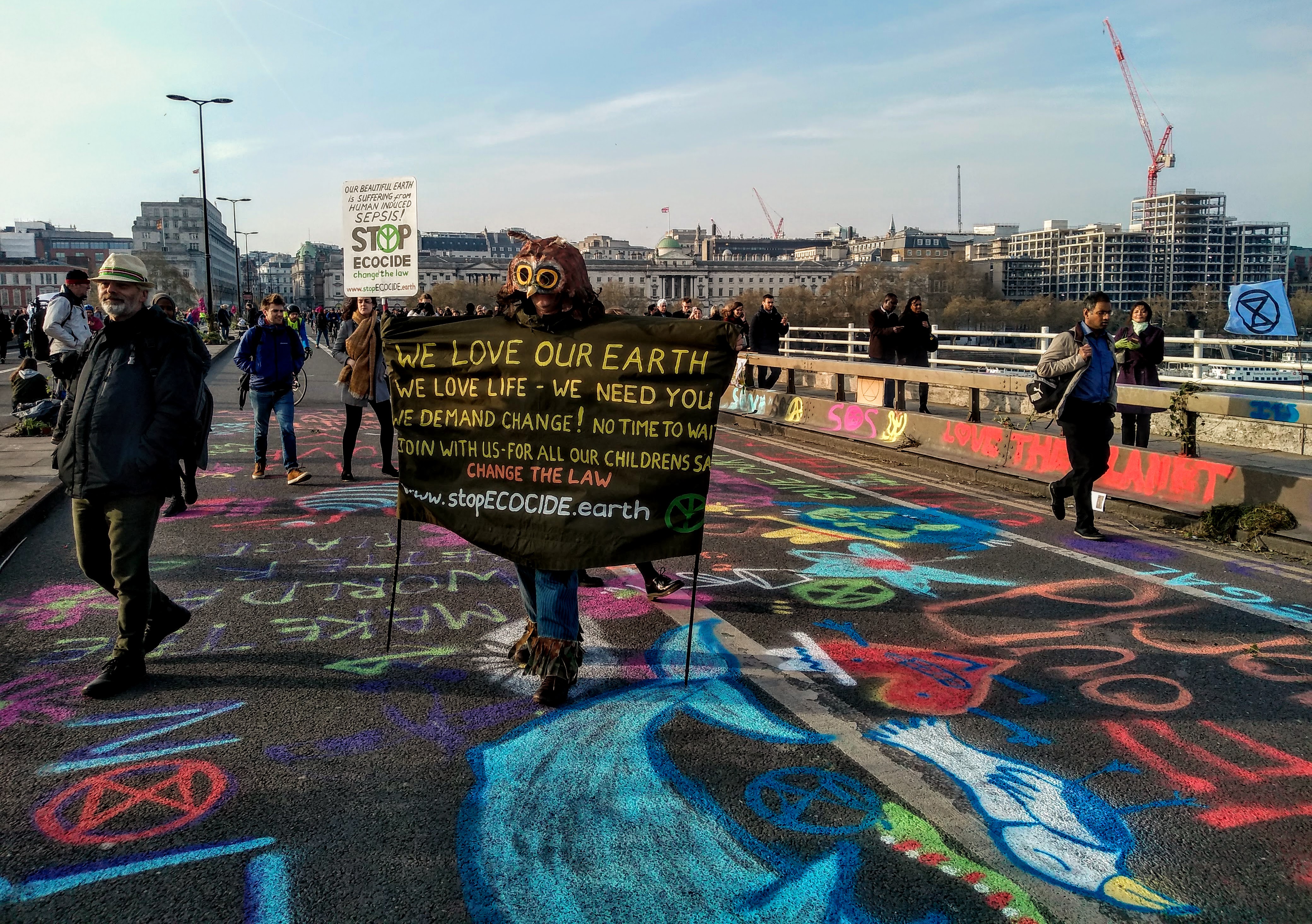
The real impact of DPP v Ziegler may be seen in how many arrestees are ultimately charged. According to their own website, previous XR protests have seen approximately 10% of arrestees go on to face charges. It will be interesting to see whether the proportion remains the same for the latest actions. If there is a noticeable decrease, perhaps we may begin to say with more confidence that the Ziegler judgment has had a tangible prospective impact on the ability of individuals to exercise their Convention rights, as well as a retrospective impact on prior convictions. It also remains to be seen whether any previous convictions for offences other than obstruction of a highway may stand to be overturned as a result of the ruling.
To conclude with the question with which this piece opened: is DPP v Ziegler a red herring, a new dawn, or something in between? While the common law is inherently incremental in its approach and it is a rare case indeed which constitutes a total watershed, this one does feel significant. It suggests that the approach of the appellate courts might be converging to some extent with the generally more lenient approach taken by many juries in recent environmental protest cases. It may not lead to a radical shift in policing strategies, but it does suggest that the balance between the rights of individuals to freedom of expression and assembly and the rights of members of the wider community to carry out their business unobstructed may have shifted slightly. But, to echo the apocryphal comments of Zhou Enlai on the French Revolution, perhaps it is simply too early to say.
What I’ve been reading this week…
I do hope you have enjoyed this first post from Green and Pleasant Blog. Next week, Sam Groom will be writing about animal law. In the meantime, I will leave you with what I have been reading this week.
After a summer spent revisiting the works of Charles Dickens, many of which I read and enjoyed as a teenager, I have finally made it back to Bleak House. Not only is it one of Dickens’ longest and most intricately plotted novels, but it is also the most concerned with the legal system. Both the book’s many tangled plot threads and the lives of its vast cast of characters revolve around a particularly intractable case in the Court of Chancery, and Dickens is at his most trenchant in his critique of lawyers and the courts. Bleak House is a deeply impressive novel, with an excellent 2005 mini-series to enjoy afterwards; though perhaps not the perfect Christmas gift for the aspiring lawyer in your life!
 Green and Pleasant Blog