Split decision in Mozambique gas project challenge

Back in October last year, I wrote a piece arguing that the UK legal system is ill-equipped to deal with the climate crisis. Citing a number of high-profile legal challenges to carbon-intensive infrastructure projects which have been dismissed over the last few years, I argued that the wide margin of appreciation enjoyed by decision-makers when it comes to translating the UK’s legally binding emissions-reduction targets into actual policy and the reluctance of judges to be seen to be making politicised decisions meant that such challenges are likely to keep failing. Since then, two interesting judgments have been handed down in cases concerning decisions to approve new fossil fuel developments, which have caused me to revisit some of the assertions I made in my previous post on the subject to see whether they still hold true.

First there was the judgment in R (on the application of Finch) v Surrey County Council [2022] EWCA Civ 187. Here, a majority of the Court of Appeal upheld the decision of Holgate J that Surrey County Council’s approval of a new oil well at Horse Hill was lawful, but disagreed that downstream greenhouse gas (GHG) emissions are “legally incapable” of being factored in as an indirect effect of a project for the purposes of its Environmental Impact Assessment (EIA). The court held instead that such emissions should be included where there is a sufficiently close connection between the proposed project and its putative effect, with the existence of such a connection being decided on a case-by-case basis [41, 141]. The majority found that the necessary causal connection was absent in the present case [85]. However, Moylan LJ held that there was a close connection and the decision to exclude end-use emissions from the EIA was therefore legally flawed. In his own words, “it is not difficult to describe the combustion of material obtained from a development whose sole purpose is to obtain that material for combustion as being an environmental effect of the development” [138].

Then, on 15 March last week, there was another split decision in the High Court over the legality of the UK government’s approval of $1.15bn of export credit finance for a huge liquified natural gas (LNG) project in Mozambique. So, why could Lord Justice Stuart-Smith, who normally sits in the Court of Appeal, and Mrs Justice Thornton not agree? What happens in the event of a 1–1 split decision of this kind? And what (if anything) might R (Friends of the Earth Ltd) v Secretary of State for International Trade / Export Credits Guarantee Department & Chancellor of the Exchequer [2022] EWHC 568 (Admin) mean for the future of UK climate litigation?

The proposed site for the LNG project is in northern Mozambique, in the offshore Rovuma Basin. It is anticipated that around 5% of the LNG extracted would be retained for domestic use in Mozambique, with the remaining 95% being exported. The challenge to the project, brought by Friends of the Earth (FoE), was really a challenge to three separate decisions.

  1. First, there was the decision on 10 June 2020 by the CEO of UK Export Finance (UKEF) — the government’s export credit agency, which works alongside the Department for International Trade to help UK exporters to find new markets through loans, guarantees and insurance — to provide $1.15bn in financial support for the project, which was supported by the Secretary of State for International Trade.
  1. Second, there was the approval of this investment by the Chancellor of the Exchequer on 12 June 2020.
  1. Third and finally, there was the decision of 30 June 2020 by the Accounting Officer and Chief Executive of UKEF to approve the underwriting minute and the decision of 1 July 2020 of the Chief Executive of UKEF to approve the clearance of documents memorandum.

However, for the sake of ease, I will group these stages together and refer to them jointly as ‘the decision’. The decision was controversial within government at the time, with support from then Secretary of State for International Trade, Liz Truss, but concerns or outright opposition expressed by Business Secretary Alok Sharma, Foreign Secretary Dominic Raab and International Development Secretary Anne-Marie Trevelyan. In particular, ministers opposed to the project cited the reputational risks it posed in the context of the UK’s hosting of COP 26 the following year. Stuart-Smith LJ recognised the controversies surrounding the project in his judgment but was at pains to stress at several points that the role of the courts in cases of judicial review is not to comment on the merits of a decision but only on its legality [6, 49, 95].

FoE challenged the decision on two, closely related grounds.

  1. Ground 1(a): the decision was based on an error of law or fact, namely that the Project and its funding was compatible with the United Kingdom’s commitments under the Paris Climate Change Agreement (“the Paris Agreement”) and/or assisted Mozambique to achieve its commitments under the Paris Agreement; and/or
  1. Ground 1(b): UKEF’s decision was otherwise unlawful in so far as it was reached without regard to essential relevant considerations in reaching the view that funding the Project aligned with the UK and Mozambique’s obligations under the Paris Agreement.

In ruling on each of these grounds, the Court was concerned with three main questions, summarised by Stuart-Smith LJ at [96]:

First, what is the appropriate scope of enquiry when a decision maker decides to take something into account in the course of the decision-making process? Second, should the Court entertain submissions and decide questions of interpretation of the Paris Agreement? Third, and related to the second, is the Foreign Act of State doctrine relevant or applicable to the facts of this case?

The scope of enquiry

All public bodies are under a Tameside duty to carry out a sufficient enquiry prior to making a decision, so that they are in possession of all the necessary information required to make it. The name is derived from Lord Diplock’s judgment in Secretary of State for Education and Science v Metropolitan Borough of Tameside [1976] 3 All ER 665 at 696, [1977] AC 1014, where he held that the question for a court is: “did the Secretary of State ask himself the right question and take reasonable steps to acquaint himself with the relevant information to enable him to answer it correctly?” [1065].

However, subsequent case law has tended to view the question of what considerations should be taken into account and what information should be sought as being a matter for the decision-maker and largely context-specific, subject to the irrationality test and any statutory requirements. Citing the judgment of the High Court in R (Spurrier) v Transport Secretary [2019] EWHC 1070 (Admin), [2020] PTSR 240 [141] ff., concerning the appropriate standard of review where the Tameside duty is engaged, Stuart-Smith LJ also noted that, where the decision under challenge depends “essentially on political judgment” or involves “scientific, technical and predictive assessments” the decision-maker should be granted a wider margin of appreciation in relation to the inclusion or non-inclusion in the decision-making process of information on a particular subject [100]. Thornton J also recognised that in the context of a complex, scientific, predictive evaluation of the kind required when conducting an EIA for this kind of project, decision-makers must enjoy a wide margin of appreciation, and cited a number of other climate change cases where this principle had been stressed [271, 277]. Yet the two judges took very different views on whether UKEF had discharged its duty of enquiry, particularly as regards the calculation of Scope 3 emissions.

GHG emissions tend to be divided into three categories for the purposes of conducting environmental/climate impact assessments. The direct emissions associated with an activity or project fall within Scope 1. In this case that is the emissions associated with the extraction of LNG. In the Horse Hill oil well case it was the emissions associated with the construction of the well and associated buildings. Scope 2 emissions include the indirect emissions from the generation of purchased electricity in order to undertake the activity. Scope 3 are all indirect emissions not included in Scope 2, including the end-use of products produced by the activity.

In relation to the Mozambique LNG project, UKEF produced a climate change assessment report which posed the question: “what are the estimated Scope 3 GHG emissions of this project?”. However, the report ultimately declined to make an estimate on the basis that it would be “inaccurate and therefore likely to be misleading”. An associated environmental/human rights report stated that Scope 3 emissions could not be reported “due to considerable uncertainty in the measurement and reporting of these data”, which “could not be resolved without further analysis or due diligence” [301].

The question for the Court in the present case, therefore, was whether this failure to take Scope 3 emissions into consideration was unreasonable. Stuart-Smith LJ held that it was not. He considered that UKEF enjoyed a wide margin of appreciation over how it conducted its assessment of the climate change impacts of the proposed project in the present case, since “at the time there was no established or internationally recognised methodology for evaluating the climate change impacts of a project like the one under scrutiny” [103], and further held that quantification would not have added anything material to the qualitative assumptions made for the purpose of assessing compliance with the Paris Agreement [234].

By contrast, Thornton J noted that the UKEF climate report set itself the task of producing an impact assessment which would “fully acknowledge”, “fully consider” and “evidence” the climate change risks associated with the project so that they could be coherently presented to ministers but ultimately failed to deliver a proper assessment of those risks [332]. She pointed out that UKEF had neglected to estimate Scope 3 emissions, even though there did in fact exist a suitable methodology, in the form of the GHG Protocol used by many private-sector companies and endorsed by the House of Commons Environmental Audit Committee [304].

Scope 3 emissions for the project were eventually calculated by the Department for Business, Energy and Industrial Strategy (BEIS) after the Prime Minister requested advice on whether they could be offset. This calculation took just 24 hours and was completed on 30 June 2020, shortly before final approval for the project was given. The BEIS calculations indicated that the LNG extracted from the site would produce some 805 million tons of CO2 over the 25-year lifetime of the project, constituting no less than 0.2% of world’s entire remaining carbon budget if we are to stay within 1.5oC of warming. Yet the UKEF climate report was never amended to reflect this updated calculation [322–324].

Other flaws in the UKEF climate report were touched upon briefly, in particular its inconsistent assessments concerning the extent to which the Scope 3 emissions from the project would be offset by a reduction in the use of more polluting fuels. While the summary section suggests it is more likely than not that the project would lead to a net reduction in global emissions, the conclusion indicates that it may lead to such a reduction, and a passage quoting analysis by the US export credit agency, US EXIM, states that it is unlikely that the project would replace more polluting fuels and suggests that it might instead hamper the growth of renewables. These differing positions could lead to very different outcomes in relation to the UK’s ability to meet its obligations under the Paris Agreement [310–316].

In light of these ambiguities, and the failure to amend the report with the updated Scope 3 emissions calculation and send it back to ministers for reconsideration, Thornton J concluded that UKEF “failed to make reasonable and legally adequate enquiries in relation to a key consideration in the decision making (climate risks). The lack of information deprived Ministers of a legally adequate understanding of the scale of the emissions impact from the Project” [333].

The interpretation of the Paris Agreement

It is worth noting at this stage that the UK’s international commitments under the Paris Agreement have no automatic force in domestic law, but that the UK has adopted a legally-binding obligation under s.1(1) of the Climate Change Act 2008 to reach net zero emissions by 2050 and an obligation on the Secretary of State to set regular carbon budgets (s.4, CCA 2008). This means that decisions can be challenged in domestic courts on the basis of their failure to comply with these domestic climate obligations, although the Act is not prescriptive about the actions that ministers or officials must take to achieve net zero. However, as the parties in the present case agreed, compatibility with the provisions of unincorporated treaties can also be justiciable in certain circumstances.

Drawing together principles from a range of authorities, Stuart-Smith LJ held that, while there was no general rule that a national court shall never determine a question of interpretation of an unincorporated international treaty, it should adopt a lower intensity of review where the language of the treaty is broad and aspirational [119]. In such circumstances, the domestic court need only satisfy itself that the decision-maker’s interpretation of the relevant treaty provisions is “tenable”, rather than necessarily correct. Thornton J concurred that the correct test in the present circumstances was that of “tenability” [262] but the judges disagreed on whether the decision under challenge satisfied that test.

Stuart-Smith LJ held that “UKEF was entitled to form the view that the support for the Project that was in contemplation was in accordance with its obligations under the Paris Agreement as properly understood. That view was at least tenable” [240], while Thornton J concluded that “the failure to quantify the Scope 3 emissions, and the other flaws in the Climate Report mean that there was no rational basis by which to demonstrate that funding for the Project is consistent with Article 2(1)(c) of the Paris Agreement on Climate Change and a pathway to low greenhouse gas emissions” [335].

Foreign Act of State doctrine

There was no disagreement on the third question, regarding the applicability of the Foreign Act of State doctrine. The Defendants submitted that the portion of Ground 1(a) concerning Mozambique’s commitments under the Paris Agreement was not justiciable, since it is not, as a matter of judicial policy, for the courts of this country to determine the legality of acts of a foreign government in the conduct of foreign affairs. After considering a range of case law on the doctrine, Stuart-Smith LJ held that, while the involvement of foreign state does not automatically preclude domestic courts from ruling on issues of foreign law, provided that there is a relevant “foothold” in domestic law in relation to the issue [130], it was not for a UK court to pronounce on whether the development of the LNG project would cause Mozambique to breach its own obligations under the Paris Agreement [232].

Where next?

So, what happens next? The split decision means that the judicial review did not succeed. However, the day after handing down its judgment, the High Court took the unusual step of issuing an order giving Friends of the Earth permission to appeal. Provided that FoE chooses to proceed, therefore, the Court of Appeal will settle the issue. Given the differing approaches taken by the judges in the lower court to Scope 3 emissions, it will be interesting to see how the judgment of the Court of Appeal in the present case interacts with its decision in Finch v Surrey County Council. Having declined to provide specific examples in that case of circumstances in which the connection between a proposed project and a putative effect might be sufficiently close to justify taking Scope 3 emissions into account when carrying out an EIA, the Court will now be forced to decide whether the connection between the planned project and the end-use emissions in the present case is so close as to make a decision to exclude them unreasonable.

The bar for success for such challenges is extremely high and the weight of recent case law is firmly against the Appellant. It would be foolish to try to predict the outcome of the appeal but, for all the reasons set out in my piece last October, one cannot help but suspect that it will be dismissed. However, given the manifest flaws in the UKEF climate change report and the scale of the GHG emissions that the project would produce, if ever there was a case to test the theory that the UK courts will never overturn a government decision on climate change grounds, this could be it.

What I’ve been up to this week

It is exam season on the Bar course, so much of my time has been taken up with preparing for assessments. But last Wednesday I took an evening off to go and see Ralph Fiennes in David Hare’s new play at the Bridge Theatre. In ‘Straight Line Crazy’, Fiennes plays Robert Moses, the hugely influential and controversial urban planner and master builder, whose decades-long career shaped much of the modern look and layout of the New York metropolitan area. After a slow start, the play worked its way up to a pretty devastating second act, and addressed many mid-twentieth-century arguments — about road-building, gentrification, access to the open space, and structural racism in planning — which are still awfully topical today.

Burning down the house: Should ecocide be an international crime?

Last week on 22nd November I attended a webinar on ‘The Crime of Ecocide’, as part of Inner Temple’s Social Context of the Law series. For those with eighty minutes or so to spare, the recording is publicly available online and well worth watching in full.

I had encountered the word ‘ecocide’ fairly frequently in activist circles.[1] I was also aware that a campaign exists to make it a criminal offence. However, going into the webinar I realised how little I actually knew about the substance of the campaign, the history of the concept, the individuals responsible for pioneering it, or how it might operate in practice. Happily, the webinar answered many of the questions I had going in, and plenty more besides.

Sir Geoffrey Nice QC, moderating the session, began by reflecting on the frustrations of COP26 and the scale of the climate and biodiversity emergencies, and noted that “the urgency of these matters under consideration no longer allows for the passage of time”. He posed a question which must surely have occurred to every practitioner seeking to use the law as an instrument for progress on environmental issues. Is the law going to be able to work fast enough to deal with these challenges, or do we have to think about alternatives? Dealing with shortness of time and the need for implementable solutions were common themes which came out strongly in the talks of both speakers and in many of the questions posed by the audience at the end of the session.

The first speaker was Professor Philippe Sands QC. He began his talk by explaining that the concept of ecocide has a fairly long history, having first been raised in the late 1960s in the context of the Vietnam War and the use of Agent Orange by the United States military. As an aside, it is surely no coincidence that Vietnam was the first of ten countries around the world which have, to date, adopted ecocide into their domestic criminal law as a specific offence. It is defined in Article 278 of the Vietnam Penal Code 1990 as “destroying the natural environment, whether committed in time of peace or war.” The term itself was coined in 1970 by the American academic Professor Arthur W. Galston, who viewed it as being analogous to genocide, and it gained widespread recognition after Olof Palme, then Prime Minister of Sweden, used it to refer to what was happening in Vietnam at the United Nations Stockholm Conference on the Human Environment in 1972.

However, Prof Sands explained that the concept remained somewhat marginal for several decades after the Stockholm Conference. He recounted a conversation in 1991 with the late great Professor Ian Brownlie about why his Principles of Public International Law contained nothing on environmental law and being told that it was because public international environmental law simply didn’t exist. After the International Court of Justice ruled that that the environmental principle of prevention was part of customary international law in its Advisory Opinion on the Legality of the Threat or Use of Nuclear Weapons in 1996, the subject did appear in the fifth edition of the textbook in 1998, but it was allotted just four pages. In 1998, when the preamble to the Rome Statute of the International Criminal Court was drafted, it was felt to be premature to include specific references to ecocide or to environmental crimes more broadly.

After the Rome Statute was drafted, however, the late Polly Higgins, a pioneering barrister and campaigner, took up the notion of ecocide and began to campaign for its widespread acceptance and adoption by relevant law-making institutions. The campaign is still spearheaded by Stop Ecocide International, the organisation she co-founded along with its current chief executive Jojo Mehta, and its charitable sister-organisation, the Stop Ecocide Foundation. In November 2020, at the request of politicians from Sweden’s governing parties, the Foundation convened an Independent Expert Panel for the Legal Definition of Ecocide, co-chaired by Prof Sands and Senegalese jurist Dior Fall Sow. The purpose of this panel was to draft a proposed definition of ecocide that could be used as the basis for further campaigning efforts to effect its adoption by the International Criminal Court (ICC) and other relevant institutions.

Prof Sands explained that in carrying out this drafting work, the panel were inspired by the work of Hersch Lauterpacht and Raphael Lemkin and the adoption by the international community after World War II of three new international crimes, in addition to the classical ‘war crimes’. These were crimes against humanity, which sought to protect the rights of individuals; genocide, which sought to protect the rights of groups; and the crime of aggression, which sought to curb and penalise the waging of illegal war. To this day, these remain the only international crimes of pertinence to be introduced in the post-war period, and all are codified in the Rome Statute. It is to this list that campaigners now propose the crime of ecocide be added.

The full text of the definition that the Independent Expert Panel proposed can be found at page 5 of its Commentary and Core Text document, published in June 2021, but the core component is this:

For the purpose of this Statute, “ecocide” means unlawful or wanton acts committed with knowledge that there is a substantial likelihood of severe and either widespread or long-term damage to the environment being caused by those acts.

Prof Sands highlighted that, despite the similarity in the name, the definition is not based on genocide because the suggested crime of ecocide would not have the same intent. Environmental degradation, while often committed intentionally (or at the very least recklessly), is not an end goal in itself in the way that the systematic destruction of a national, ethnical, racial or religious group is the end goal of a person who commits genocide. Rather, the destruction of the natural environment occurs as a by-product of other choices, usually in the pursuit of specific economic and social ends. Thus, the drafters instead modelled their definition on that of crimes against humanity under Article 7 of the Rome Statute.

The reason for the choice of nomenclature was rather simpler. When the Stop Ecocide Foundation carried out market research on the subject, they found that the public did not respond at all to the concept of ‘environmental crimes against humanity’, but had a much stronger and more instinctive response to the concept of ecocide, which the individuals polled almost universally agreed should be stopped.

Although they borrowed elements from the definition of crimes against humanity, the drafters wanted to come up with a non-anthropocentric definition of ecocide. Prof Sands stressed the legal significance of severing the link with humans in the definition, so that any potential future prosecutions under an amended Statute would not have to prove a causative link with harm to humans. On a more philosophical level, the definition reflects the notion that the natural world has some intrinsic and fundamental value, independent of its value to humanity.

There was a spirited debate about whether the definition should include a list of acts which would qualify as ecocide. In the end, a narrow majority favoured not including one, since lists in such a context tend to imply that anything not included is permissible, and this was not an impression that the drafters wished to create. Moreover, one could not realistically include a list of qualifying acts without including runaway climate change and to do so would be to place a huge political hurdle in the way of states signing up to support the concept, because it would create the impression introducing regulation to control their emissions by the back door. The consequence of adopting a definition without a list is that, were the proposed definition to be adopted by the ICC, it would be up to prosecutors to decide what acts to prosecute and judges to decide whether they qualify for conviction.

Prof Sands ended on a moderately optimistic note by highlighting that the concept of ecocide has been endorsed by the Secretary General of the UN, António Guterres, and Pope Francis. One of the committees in the Belgian Parliament has proposed to adopt a resolution in support of the adoption of the crime of ecocide and the full Parliament is expected to do so in the coming weeks. Prof Sands feels confident that there is momentum behind the concept which means that its adoption by the ICC is a matter of when, rather than if.

The second speaker was James Cameron, founder of FIELD (Foundation for International Environmental Law and Development). His talk moved beyond the text of the new proposed offence and considered its application in a wider context. He began by situating the ecocide campaign within the broader context of the youth climate movement, which has emerged partly in response to younger generations’ sense that current political and legal structures are inadequate to deal with the challenge at hand. He also noted that this movement uses the language of climate justice and made a plea for legal practitioners to think more creatively about how the law can be used to transformative effect.

Reflecting again on the early work of Polly Higgins on the issue of ecocide, he confessed to having been initially sceptical of a strategy which focused primarily on the ICC. He felt that a more productive approach would be to pursue existing rights arguments, especially those which argued environmental issues through the prism of human rights, through national courts and tribunals. Over time, however, he has come to view the concept more sympathetically as one potential way for the legal order to give expression to the most vulnerable pieces of the natural environment. He highlighted the parallel phenomenon of natural capital, more often discussed in the field of economics, as another potential way of giving institutional voice to a somewhat abstract idea, namely the protection of the natural world. He suggested that both natural capital and ecocide are fundamentally about creating rights in and for the environment for its own sake, beyond of its utility to humans.

Even though Mr Cameron has come around on the concept of ecocide as an addition to the ICC Statute, he still made a compelling case, first that radical concepts need to work through familiar structures, and second that ecocide could be more effectively embedded if it was able to operate through national as well international institutions. He suggested that trustees, ombudsmen, and advocates general could all help to ensure that there are people with procedural rights to pursue the issue in various tribunals, and counselled against putting all of the proverbial eggs in the basket of the ICC. He also argued that any campaign to add ecocide to the Statute of the ICC needs to think creatively about access to justice in this context and raised the question of whether there might be any scope for individuals to press charges under such a law.[2] While a new ecocide law would be significant and exciting step, it would still need to be viewed in the context of more general legal and non-legal advocacy on behalf of the environment. 

One theme which emerged across the webinar and the Q&A was the extent to which the problems which ecocide is designed to address stretch traditional notions of international law, which are geared towards relations between sovereign states. After all, it is not only, or even primarily, states which are responsible for the most egregious acts of environmental damage and degradation. One questioner asked whether corporations might potentially face prosecution by the ICC, but Prof Sands didn’t really see how corporate criminal responsibility could work in practice. The largest polluters can afford to pay almost any fine levelled at them and one cannot lock up a corporation.

Besides, international crimes are ultimately not committed by abstract governments or corporations but by individuals. This is as true for ecocide as it is for genocide, or crimes against humanity. Every active decision which results in catastrophic harm was made by someone. Thus, it was suggested by the speakers that the focus would have to be on prosecuting (and, if necessary, imprisoning) chief executives and politicians as individuals. Although the members of the Independent Expert Panel have all studiously avoided naming names, Pilita Clark, writing for the Financial Times, identified Brazilian President, Jair Bolsonaro, and ExxonMobil CEO, Darren Woods, as potential candidates. As outlandish as it might seem now, if the momentum keeps building behind the idea of ecocide, perhaps they might be the first of many.

What I have been watching this week…

After Sam’s lovely tribute to the joys of Advent last week I must admit that I have not been consuming anything nearly as highbrow as César Franck’s violin sonata recently. Instead I have been indulging in a bit of timey-wimey escapism and very much enjoying the current series of Doctor Who, which has been a slightly silly delight for the past few weeks, as the days have grown chillier and the evenings darker.


[1] The word derives from the Greek oikos, meaning home, and the Latin caedere, meaning demolish or kill. Thus, a rough translation (though not technically a correct etymology, since the word was a modern coinage) is “to kill one’s home”.

[2] The webinar did not include a discussion of the Aarhus Convention as a potential model and/or point of comparison for such participation and procedural rights but, as Sam pointed out to me, it certainly seems to offer some interesting parallels.

For the birds? Judicial review challenges to protect hen harriers and other animals

This week I learned that some 7% of the United Kingdom consists of moorland cultivated for the sport of grouse shooting. The area of land used for grouse shooting within national parks alone is more than twice the size of Greater London. The sport of grouse shooting involves trying to kill red grouse with a shotgun. It is practised in two forms. In a driven grouse shoot, the more common and more prestigious form, beaters sweep across the moor in a line, driving grouse towards a stationary parallel line of shooters, who aim at the oncoming birds. In a walked-up shoot, which provides more physical exercise for the shooters, a line of shooters and beaters walks across the moor, causing the disturbed grouse to fly away from them and be shot at from behind. In both cases, the speed and low flight of a grouse presents a challenge to those wealthy enough to participate. 

The shooting of grouse and other birds for sport does not attract the same scale of public condemnation as fox hunting. This could be because mammals earn our compassion more easily than other animals, because shooting a bird is perceived as delivering a quick death not comparable to the suffering of a hunted fox, or because shooters tend to wear less ostentatious costumes than hunters. Nevertheless, grouse shooting is controversial. On the one hand, it involves the annual burning of vegetation on carbon-storing peat bogs, the culling of animals thought to threaten the health of grouse, and, of course, the killing of birds for fun. The Royal Society for the Protection of Birds campaigns, not for the end of grouse shooting, but for more sustainable practices. On the other hand, the British Association for Shooting and Conservation, a membership organisation that lobbies for the “interests of shooting”, claims that grouse shooting delivers local economic benefits and preserves unique moorland habitats at a low cost to the taxpayer.

Gamekeepers are responsible for ensuring that there is sufficient wildlife (or game) on an estate to provide good sport. In the context of grouse shooting, this primarily involves the elimination of animals considered to threaten the population of grouse. One of these animals is the hen harrier. Hen harriers are birds of prey that can be found across Europe and Asia. In the United Kingdom, hen harriers nest in moorland heather and feed grouse chicks to their young. Nesting hen harriers are often killed and their nests destroyed. It is suspected that this is done by gamekeepers, because the presence of this predator is not conducive to the aim of a large population of shootable grouse. Although such treatment of hen harriers is criminal, the law is not well enforced, due in part to the inherent difficulty of monitoring activity on vast expanses of moorland, and also due, it could be thought, to the political power of those running and visiting the estates. But the persecution of hen harriers cannot be allowed to continue without accepting the disappearance of the species from this country, because their numbers are extremely low. Birds of Conservation Concern 4: the Red List for Birds, published in 2015 by the British Trust for Ornithology, lists hen harriers as a species of conservation concern. In 2017, it was reported that only four breeding pairs remained in England. For this reason, it has been considered necessary to find ways of protecting and promoting the propagation of hen harriers while preventing or disincentivising their deliberate destruction on grouse moors.

Natural England, the public body charged with protecting and promoting the natural environment in England, has grappled with this problem. One potential solution has been the licensing of diversionary feeding. Diversionary feeding involves providing hen harriers will food so that they do not need to eat grouse chicks. Although this practice has succeeded in Scotland, landowners in England have not embraced it because it is claimed to be costly, ineffective, and liable to interfere with the suppression of other predator species.

Another potential solution is known by its proponents as brood management and by its detractors as brood meddling. These euphemistic terms refer to the practice of removing hen harrier chicks from their nests, raising them in captivity and releasing them as adults into the wild. BM, as one can neutrally say, is controversial. It is generally supported by those associated with grouse shooting and opposed by conservationists. However, such is the nature of the hen harrier problem that some find it difficult to imagine any successful solution without the buy-in of the landowners and shooters.

We now have to interrupt this narrative for a brief but important exposition of some relevant law.

Section 1(1) of the Wildlife and Countryside Act 1981 makes it a criminal offence to intentionally kill, injure or take any wild bird; to intentionally take, damage or destroy the nest of a wild bird while that nest is in use or being built; or to intentionally take or destroy the egg of any wild bird. Further, in respect of those species of birds listed in schedule 1 of the Act, section 1(5) makes it an offence to disturb a bird while the bird is building a nest or is in, on or near a nest containing eggs or young, or to disturb the bird’s dependent young. Hen harriers are listed in schedule 1.

It can be seen that section 1 of the Wildlife and Countryside Act makes unlawful practices including BM. However, under section 16 of the Act, the Secretary of State (who delegates this power to Natural England) may grant licences to permit an activity that would otherwise fall foul of section 1. In order to be so permitted, an activity must be for one of a fixed list of purposes set out in section 16(1). These include (section 16(1)(a)) “scientific, research, or educational purposes”, and (section 16(1)(c)) “the purpose of conserving wild birds”. Section 16(1A)(a) provides that Natural England may only grant a licence for any of these purposes if “it is satisfied that, as regards that purpose, there is no other satisfactory solution”.

Further to this, hen harriers are listed as a threatened species in annex 1 of the EU Birds Directive (2009/147/EC). This means that EU member states are required to take special conservation measures to ensure the survival and reproduction of hen harriers and to designate “special protection areas” for them. There are two special protection areas in England relevant to hen harriers: the Bowland Fells and the North Pennines Moors. Most hen harrier nesting activity in England takes place in these areas.

Section 8(1)(d) of the Conservation of Habitats and Species Regulations 2017 provides that a special protection area under the Birds Directive is a “European site” for the purposes of those Regulations. Under regulation 63 of the Regulations, if Natural England is considering authorising a plan or project that is likely to have a significant effect on a European site (for example when it is considering an application for a licence under section 16 of the Wildlife and Countryside Act), it must make an assessment of the implications of the plan or project for the site in view of the site’s conservation objectives. Having made that assessment, Natural England can only agree to the plan or project (that is, grant the licence) if it is satisfied that it will not affect the integrity of the European site.

In practical terms, the legal provisions explained above have the following effect. If you want to undertake BM or another conservation practice in England that would involve committing an offence under section 1 of the Act and that is likely to have a significant effect on a special protection area, you must apply to Natural England for a licence. In order for a licence to be granted to you, (a) the practice you wish to undertake must be for a specified purpose, (b) there must be no other satisfactory solution to achieving that purpose, and (c) the practice must not affect the integrity of the special protection area.

Back to our regularly scheduled programming. In 2015, Natural England’s Science Advisory Committee advised the Board of Natural England to initiate a scientific trial of BM in England. The Board accepted the advice and passed it to the Secretary of State for the Environment, Food and Rural Affairs (then Liz Truss MP). published a document called the Joint Action Plan which proposed, among other things, diversionary feeding and a BM trial. Such a trial would, it was proposed, need to be licensed under section 16(1)(a) of the Wildlife and Countryside Act 1981. In 2017, an application was made to Natural England for a licence under that section to carry out activities to obtain evidence of the effectiveness or otherwise of BM. The trial would examine the effect of BM on the moorland community as well as whether released hen harriers would go on to become successful breeding adults in the wild. The licence would cover the first two years of a five-year trial.

Considering the application, Natural England completed two assessments. One, the Technical Assessment, assessed the merits of the proposed trial generally. The other, the Habitats Regulations Assessment, assessed the implications of the proposed trial in view of the conservation objectives of the two relevant special protection areas (the Bowland Fells and the North Pennines Moors), as required by regulation 63 of the Conservation of Habitats and Species Regulations. In 2018, the Chief Operating Officer of Natural England accepted the application and approved the grant of a licence.

Natural England’s decision to grant this licence was met with disagreement by those who consider that brood management is an ineffective way to protect hen harriers that prioritises the concerns of the shooting lobby. Both the RSPB and Dr Mark Avery applied for permission to apply for judicial review the grant of the licence. Dr Avery is a scientist, a conservation activist and a former International Director of the RSPB. Permission was granted and the applications were heard together in the High Court by Mrs Justice Lang in December 2018 and January 2019. In March 2019, judgment was handed down dismissing the applications: R (RSPB) v Natural England; R (Mark Avery) v Natural England [2019] EWHC 585 (Admin). In October 2019, Lord Justice Newey granted both claimants permission to appeal to the Court of Appeal. The appeals began to be heard together in March 2020, but the hearings were interrupted by the illness of one of the judges. In May 2020, Natural England granted a second licence, in similar but not identical terms to those of the first licence, to enable the BM trial to continue until 30 September 2021. The appeals were re-listed and finally fully heard by Lords Justices Underhill (VP), Newey and Phillips in January 2021. Now, the parties made arguments about the second licence, and not the first licence, which had expired but which remained technically the subject of the legal challenge. Judgment was handed down dismissing the appeals on 9 November 2021: R (RSPB) v Natural England; R (Mark Avery) v Natural England [2021] EWCA Civ 1637.


There was no point in my creating suspense about the outcome of these proceedings. Judicial review challenges concerning animals tend to fail. It is more interesting to try to ask why this might be.

There were eight separate grounds of challenge before Lang J. They were clearly set out and dealt with at paragraphs [52] to [124] of the High Court judgment. The most interesting are the two in respect of which permission to appeal was granted. They are, first, that Natural England misapplied section 16(1) of the Wildlife and Countryside Act 1981, and, second, that it was unlawful to permit BM in the two special protection areas.

The claimants’ primary argument on the first issue was that it was a mistake to characterise the relevant purpose as that under section 16(1)(a), a “scientific, research, or educational” purpose. What had to be assessed was not the direct purpose of the proposed trial but the ultimate purpose of the activity, which was conservation (section 16(1)(c)). Once this was understood, it was clearly not the case that there was no other satisfactory solution to achieving the relevant purpose. Namely, either diversionary feeding or the effective enforcement of the offences under section 1 would be a satisfactory solution in respect of conservation. As such, if Natural England had identified the correct purpose, it should not have granted the licence. The Court of Appeal disagreed about the identification of the purpose. The appropriate purpose is the specific purpose for which the licence is sought. If it were necessary or possible to identify a higher-level purpose, which could often be conservation, the extended list in section 16(1) would be pointless. Natural England was right to consider that this trial had a research purpose, namely to gather evidence about the conservation and social science impacts of BM in England, and as such that there was no other satisfactory solution to achieving this purpose.

On the second issue, the claimants argued that the concept of BM was fundamentally incompatible with the integrity of the special protection areas. Even if the displacement of hen harriers took place within a single area, the birds were still removed from their habitat. The Court of Appeal considered that both the trial and BM more generally should be seen in the long term. On this view, any displacement was temporary, while the real purpose of the activity was the preservation and promotion of the hen harrier population in the area.

These issues, and those dispensed with in the High Court, are relatively pedestrian public-law issues. Can the fact that they were relied upon, and the fact that they failed, tell us anything about the use of the judicial review procedure to challenge decisions affecting the welfare of animals?

First, judicial review generally attacks procedural defects. Unless a decision is vitiated because it is ultra vires (outside the powers of) the public body altogether, or so unreasonable that no reasonable decision-maker could have made it, both of which are rare, an application for judicial review will usually have to identify a material consideration that was not taken into account, or a consultation requirement that was not met, or a principle of natural justice that was neglected (we have all heard enough about that recently). It is really only in the realms of fundamental rights that substantive review grows any teeth by way of proportionality analysis. And, as we all know, animals have no fundamental rights. If a public body makes a decision that is harmful to animals, the law is such that that in itself will usually provide no basis for a judicial review. If the decision is vulnerable, it will be by accident, because there happens to have been a legally significant error besides the contended moral wrongness of the decision. Until animals are granted or recognised as having meaningful rights in public law, or until more weighty duties are placed on the public bodies charged with making decisions affecting them, judicial review will be an unreliable technique for animal activists.

Second, judicial review is a powerful but blunt instrument. It can nullify a decision whatever the consequences if that decision is vitiated by a legal error. This is because the courts, in this field at least, are concerned with absolute rights and wrongs. A public body may never act contrary to procedural fairness or beyond its legal powers, regardless of any countervailing reasons for doing so in a particular case. In the same way, if a public body is within its rights to act in a certain way, a court will not weigh that against any reasons why it should not do so. The law’s dealing in such absolute terms is to be contrasted with politics and the balancing-acts and trade-offs between incommensurable interests that are conducted in that field. (These are the two moralities described by John Laws in The Constitutional Balance.) This situation puts animals at a disadvantage under the law because the law, like our society, generally takes the view described by Robert Nozick as utilitarianism for animals and Kantianism for people (by which he meant humans). This means that, while humans are recognised as possessing some absolute rights that can never be overridden, animal interests are only relative, always susceptible to submission to another goal. To succeed in a judicial review, you need a trump card, and animals have no trump cards.  

These two considerations do not mean that animal activists cannot usefully use the judicial review procedure. There will be times when an unpopular decision is vitiated by a procedural error unrelated to the merits of the decision, and a campaigning organisation could legitimately challenge that decision. The rule of law requires that unlawfully-made decisions be open to challenge regardless of litigants’ motivation. There will also be times when, even under the current law, a decision is unlawful for reasons genuinely related to the consideration of or impact on animal interests. The Humane League’s litigation about inherently unhealthy breeds of chicken could be one such case. Finally, the common law develops through litigation, and each application for judicial review presents the court with an opportunity, of varying significance, to do things differently.

These potential benefits have to be balanced against the significant financial cost of taking cases like this to court. Money is sometimes raised from individuals who have not been presented with a sober and objective assessments of the legal merits of the case. Might animal activists not do better to bring fewer speculative judicial review challenges, and spend the time and money building up their own voices on the political field, so that they do not have to complain after every decision that the shooting lobby, the farming lobby, or the development lobby has captured the public institutions? That way, they could set their sights higher than the dozens of UK-resident hen harriers, and aim to protect the thousands of red grouse that are killed for fun every year. If it could be done for foxes through political means, why not for birds?

This intersects with a further issue for animal activists. Should the guiding principle be conservation, that is the protection and promotion of species, or animal rights or welfare, where the focus is on individual living beings? My background, as can probably be seen by reading this post, is in the latter approach. I have not rehearsed the arguments here. It is fundamentally a moral question, not a legal or a tactical one. However, it is interesting to wonder whether one approach lends itself more readily than the other to legal enforceability against the state. If the aim is to lift certain debates outside the realm of politics and situate them in the courtroom, a campaigning organisation, or the movement in favour of animals generally, could cynically adopt the moral position that would most readily achieve this. Whether there is indeed a difference here, and if so in whose favour, is a question for another day.

What I’ve been listening to this week…

It is so nearly Advent. I have been sustaining myself with this incredible recording of César Franck’s Violin Sonata, performed live in Moscow by David Oistrakh and Sviatoslav Richter in 1968. I don’t think I am projecting an Advent feeling onto it: The first three movements have searching qualities, sometimes lost, sometimes frenzied and sometimes in deep despair. The final movement feels like Christmas.

Photo by Mark Hamblin.

A canary in the coal mine? Why the UK legal system is ill-equipped to deal with the climate crisis

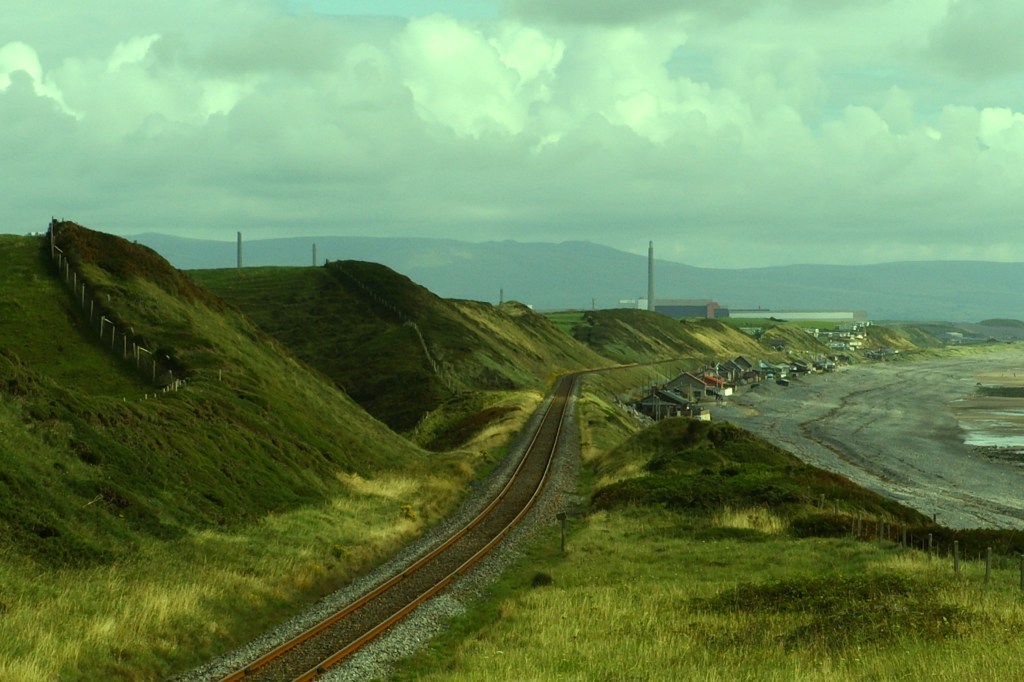
I grew up on the west coast of Cumbria, about two miles north of Sellafield nuclear reprocessing plant and eight miles south of the former mining community and port town of Whitehaven. Further up the coast near Workington, onshore wind turbines overlook the fascinatingly alien landscape of the Workington slag banks, formed from the by-products of pig iron production by the Workington Haematite Iron Company during the second half of the nineteenth and first half of the twentieth century. On a clear day, you can also see the larger offshore turbines of the Robin Rigg windfarm out in the Solway Firth.

Steel production ceased in West Cumbria in 1974 and the county’s last deep coal mine, the Haig Pit at Whitehaven, closed in 1986, but the landscape still provides an insight into the area’s industrial heritage. It also offers a clear indication as to what now sustains the economy of many of the coastal communities between Silloth and Barrow-in-Furness — the energy and especially the nuclear sector. In 2008, a public-private partnership called ‘Britain’s Energy Coast’ (since renamed ‘Building Extraordinary Communities’) launched its masterplan for the West Cumbrian economy, designed to show how it could be put on a sustainable footing by 2027 through investment in new nuclear power plants and renewable energy projects.

The view of Sellafield from Nethertown railway bridge
Workington wind turbines
Workington slag banks. The unusual shape of the rock is due to the giant ladle that was used to dump molten slag off the banks above.

But thirteen years later very little of what appeared in the masterplan has come to pass. The area’s economy is still extremely reliant on Sellafield, with research by Oxford Economics in 2017 suggesting that close to 60% of all jobs in the borough of Copeland are in some way dependent on the nuclear site [p. 21], and instead of major new renewable energy schemes generating jobs and economic growth we have the controversial Woodhouse Colliery proposal. If it goes ahead, this colliery near Whitehaven will be the UK’s first new deep coal mine in thirty years.

The company behind the project, West Cumbria Mining (WCM), started developing its plans for the extraction and processing of metallurgical (or coking) coal in 2014. The company claims that the mine would create 530 permanent jobs, of which 80% would go to local people. More controversially, it argues that it would be a ‘net zero’ emissions development, which would achieve compliance with the UK’s legally binding climate commitments via offsetting residual emissions with carbon credits certified by the Gold Standard Foundation.

It is easy to see why the prospect of a major new employer in area, creating hundreds of jobs, might seem appealing. Although wages at Sellafield are high, West Cumbria overall has faced sustained economic decline over several decades. Its working-age population is shrinking. An ever-increasing number of shops in Whitehaven town centre are shuttered up. The area is badly in need of some of the ‘levelling up’ promised by the Government.

In this context, it is perhaps not surprising that the proposal was previously approved by Cumbria County Council on three separate occasions. However, in February this year the council announced that it would be reconsidering the application for a fourth time. A month later, having previously declined to intervene, then Secretary of State for Housing, Communities and Local Government Robert Jenrick announced that he would be calling the application in for a public inquiry after all, citing new recommendations by the Government’s Committee on Climate Change as the rationale for the U-turn.

The inquiry opened on 7 September 2021 and ran for four weeks. The applicant, WCM, and Rule 6 Parties, local campaign group South Lakes Action on Climate Change (SLACC) and Friends of the Earth, appeared and were represented by counsel. Cumbria County Council did not take part in the proceedings, having decided to adopt a neutral stance on the application. Especially keen readers can find the recordings of all the sessions on the Planning Inspectorate YouTube channel.

Before being called in, the proposed development had already been subject to legal challenges on both sides of the debate. A judicial review application against the County Council’s approval of a previous version of the proposal by campaign group Keep Cumbrian Coal in the Hole received permission in February 2020, before proceedings were curtailed when WCM submitted a revised planning application. Earlier this year, the mining company itself announced that it would seek to challenge the County Council’s decision to reconsider the proposal for a fourth time, but the Secretary of State announced a public inquiry before the matter could reach the permission stage.

The entire process to date has served to highlight yet again the extent to which our legal and planning systems struggle to fully assess the climate impacts of proposed developments. Despite the UK’s legally binding obligation under s.1(1) of the Climate Change Act 2008 to reach net zero emissions by 2050 and the obligation on the Secretary of State to set regular carbon budgets (s.4, CCA 2008), the Act is not prescriptive about the actions that the Government or other relevant decision-makers must take to achieve these obligations.

The courts have also tended to be hesitant about pushing back too hard against decisions to approve individual carbon-intensive infrastructure projects. In a recent interview with The Planner magazine, barrister Estelle Dehon, who frequently acts on behalf of environmental campaign groups, suggested that this hesitation might be due in part to a political environment shaped by “many years of politicians… telling the courts ‘If you go too far, you will be knocked back. If you take liberties, we will act to ensure that you can’t do that any more. If you criticise too closely, we’ll clip your wings’.”

Finally, it is difficult to draw precise causal links between specific proposals under challenge and the vast global impact of the climate crisis. Indeed, a recent paper by researchers at the University of Oxford found that the claimants in 73% of cases surveyed across 14 jurisdictions did not even try, failing to cite any peer-reviewed evidence in their submissions. All these factors feed into an environment which makes it hard for legal challenges around climate change to succeed.

In the UK in the last two years, a number of high-profile challenges to emissions-heavy developments have been dismissed. In R (on the application of Finch) v Surrey County Council [2020] EWHC 3566 (Admin), [2021] PTSR 1160, concerning the grant of planning permission for the drilling of four new oil wells in Surrey, the High Court held that a developer’s obligation under the Town and Country Planning (Environmental Impact Assessment) Regulations 2017 to provide an environmental statement describing the likely direct and indirect impacts of a development did not extend to assessing the greenhouse gas emissions resulting from the use of an end-product originating from that development. In R (on the application of ClientEarth) v Secretary of State for Business, Energy and Industrial Strategy [2021] EWCA Civ 43, [2021] PTSR 1400, the Court of Appeal held that then Secretary of State Andrea Leadsom had carried out the balancing exercise under s.104(7) Planning Act 2008 correctly and was entitled to conclude that the benefits of the proposed new gas-fired Drax Power Station outweighed the environmental costs [108–109].

Finally, in R (on the application of Friends of the Earth and others) v Heathrow Airport Ltd [2020] UKSC 52, [2021] PTSR 190, the Supreme Court overturned the judgment of the Court of Appeal that the Government’s Airports National Policy Statement was unlawful on climate change grounds. The Court of Appeal had held that the ANPS failed to satisfy the obligation under s.5(8) of the Planning Act 2008 to “include an explanation of how the policy set out in the statement takes account of Government policy relating to the mitigation of, and adaptation to, climate change”. It defined ‘Government policy’ as being both the UK’s ratification of the Paris Agreement and subsequent statements by ministers Andrea Leadsom and Amber Rudd (Plan B Earth v Secretary of State for Transport [2020] EWCA Civ 214, [2020] PTSR 1446 at [228]). The Supreme Court dismissed these oral statements as being insufficiently clearly formulated to constitute Government policy and held that it would be unreasonable to expect civil servants to “trawl through Hansard and press statements” to identify policies [105]. One might question why the Court did not consider the Paris Agreement itself to constitute Government policy, since ratified international agreements form a clearly defined and readily identifiable list. Given the rather general wording of the agreement, however, it might not have made a difference to the outcome of the case even if the Court had held that it was Government policy to adhere to it.

The cases cited above are not an exhaustive list. Other challenges to the construction of HS2 and the design of the new UK Emissions Trading Scheme have also failed on broadly similar grounds, namely the wide margin of appreciation enjoyed by decision-makers when it comes to translating the UK’s legally binding emissions reduction targets into actual policy. This degree of discretion, coupled with the growing weight of adverse precedent, means that climate campaigners seeking to bring public law challenges against Government policy are facing an uphill battle.

Indeed, the outcomes of these cases beg the question of whether legally binding climate targets are actually enforceable in any meaningful sense. At a national level, the Committee on Climate Change calculates that the UK is not on track to meet its fourth or fifth carbon budgets, and there is an overwhelming scientific consensus that we are headed for catastrophic warming without drastic emissions reductions in the next decade, let alone by 2050. Yet on a case by case basis, it always seems possible for a decision-maker, company or industry body to argue that the emissions from a specific carbon-intensive infrastructure project will be offset by emissions reductions in other sectors of the economy and/or that the socio-economic benefits of a proposal outweigh its negative environmental impacts.

Thus, judicial review challenges brought against the lawfulness of such decisions are likely to keep failing, because of the near impossibility of proving that a particular project in isolation will prevent the UK from meeting its emissions reduction targets. Irrationality challenges seem even less likely to succeed, since the bar for such challenges is set so high (although if one asked an 18-year-old whether they thought it was rational to be constructing new coal mines, oil wells, runways or gas-fired power stations in the 2020s, one suspects they might give a rather different answer from a judge).[1]

Fortunately for campaigners against the Cumbria coal mine, the planning system offers more flexibility about how climate impacts are included in the decision-making process than the legal system does, in part because planning decisions are more explicitly informed by political considerations than legal decisions are. For example, as Estelle Dehon, acting for SLACC, submitted in her closing statement to the inquiry on 1 October 2021, the judgment in Finch v Surrey County Council relates only to whether end-use emissions must be factored in when determining the legality of an Environmental Impact Assessment. It is not authority for the proposition that such emissions cannot be a material planning consideration. In the case of a coal mine, end-use emissions are necessarily fundamental in determining the overall climate impacts of the proposed development.

The inquiry spent its first week dealing with the potential economic benefits of the scheme, its second focussing on the need for coking coal in UK and EU steelmaking, and its third considering the impact of the scheme on carbon-dioxide and methane emissions. The Rule 6 Parties lead a range expert witnesses, whose evidence challenged WCM’s assertion that the project was compatible with the UK’s goal of reaching net zero emissions by 2050. In particular, Professor Stuart Haszeldine of Edinburgh University suggested that the coal was unlikely to be of sufficiently high quality for use in the UK and EU steelmaking markets and the majority was likely to end up being exported further afield, thus negating any net emissions savings on transport, while Professor Paul Ekins of University College London stated that there was no doubt in his mind that the proposals were incompatible with the UK’s emissions targets.

A further blow to the contention that the mine could be rendered net-zero-compatible via carbon offsetting was dealt by the very organisation proposed to supply the carbon credits required to facilitate the offsetting, the Gold Standard Foundation. In a letter to Friends of the Earth and to the inquiry, the Foundation stated that:

“The latest scientific paper from the Intergovernmental Panel on Climate Change on August 9 gave a stark reminder of the pace at which the planet is warming and the unequivocal influence of human activity on this warming, in particular the extraction and use of fossil fuels.

“We note that achievement of the goals of the Paris Agreement would be rendered impossible by the already planned increase in fossil fuels (UN Production Gap Report, 2019), and that the International Energy Agency has clearly stated that further investment in fossil fuels is unnecessary, with achieving global net zero goals instead requiring a rapid reduction in their use.

“It is clear to us, in light of this evidence and reflecting the principles of the mitigation hierarchy, that a new coal mine in 2021 is an activity that must be avoided in the context of the climate emergency.”

Beyond the decision to call the application in, there have also been further signs that the tide of political opinion within the Conservative party might have turned against the project, with Energy Secretary Kwasi Kwarteng stating that there were “very compelling reasons” not to open it and MP for Penrith and the Border, Dr Neil Hudson, dropping his support for the project ahead of COP 26 and urging the Government to invest in clean energy jobs in Cumbria instead. Inspector Stephen Normington indicated that his report should be expected in late December or early January, after which the ultimate decision will rest with the Secretary of State.

Whatever Michael Gove ultimately decides, however, a legal challenge seems fairly likely, at which point all the issues around how our courts deal with climate litigation may come into play once more. All this raises the question — at what point will it become so apparent that we are not on track to meet our net zero emissions targets that the courts will feel justified in declaring new fossil fuel developments to be unlawful? At what point will the effects of the climate crisis become so severe and so unarguable that any decision to approve such a development will be held to be irrational? How many more canaries will we allow to die before we finally decide to close the coal mine?

[1] For discussion of irrationality in this context see R. (on the application of Finch) v Surrey County Council [2020] EWHC 3566 (Admin) ,[2021] PTSR 1160, [127]; R (on the application of Friends of the Earth and others) v Heathrow Airport Ltd [2020] UKSC 52, [2021] PTSR 190, [125-129].

What I have been listening to this week…

A couple of weeks ago, some eighteen months after the gig was initially scheduled to take place, I was finally lucky enough to see Nick Cave in concert at the Royal Albert Hall. I have been a fan of his music since I was a child and so seeing him live was an absolute privilege and delight. Almost the entire setlist was from two albums: 2019’s majestic, if sometimes harrowing, ‘Ghosteen’ — a meditation on love and loss written in the aftermath of the death of Cave’s teenage son in 2015 — and 2020’s ‘Carnage’, a wild and surreal lockdown album composed over just three days alongside longtime collaborator Warren Ellis. Both are exceptional in their own way and I have been listening to them and the rest of the Bad Seeds back catalogue a lot since the gig.

On a slightly more sedate note, my choir is currently rehearsing for a performance of Brahms’ Requiem in December, so I have been reacquainting myself with one of my absolute favourite choral works, and trying not to get too out of breath singing the fugue in movement six!


At the intersection of law and activism: obstructive protests after DPP v Ziegler

On 25 June 2021, the Supreme Court handed down its judgment in what is being hailed in activist circles as a landmark case for protest rights in the United Kingdom. Director of Public Prosecutions v Ziegler and Ors [2021] UKSC 23; [2021] 3 WLR 179 arose out of a protest against the biennial Defence and Security International (DSEI) arms fair at the Excel centre in East London. The appellant protesters had sought to disrupt deliveries to the site by lying down in the middle of the dual carriageway leading to the Excel centre. They were charged with wilful obstruction of a highway, without lawful authority or excuse, under of Section 137 of the Highways Act 1980, but were acquitted at trial. The DPP successfully appealed to the Divisional Court but that decision was itself overturned by the majority of the Supreme Court in June.

How did a seemingly routine protest case prove so difficult to resolve? And is the excitement with which many activists have greeted the judgment justified or misplaced?

Notwithstanding the relative simplicity of the facts of the case, the Ziegler judgment dealt with some complex and important points of law around obstructive protests. The main considerations for the Supreme Court were: 1) what test should be applied by appellate courts to an assessment of the decision of the trial court in respect of a statutory defence of ‘lawful excuse’ when Convention rights are engaged in a criminal matter; and 2) whether physically obstructive conduct by protesters is capable of constituting a lawful excuse for the purposes of Section 137 Highways Act 1980 (DPP v Ziegler at [7]).

On the first issue, appellate courts have traditionally applied Wednesbury unreasonableness standards to the decisions of lower courts in cases involving Section 137, holding that a decision over whether a lawful excuse defence applies should stand unless no reasonable court could ever have come to it on the facts. However, the Divisional Court in DPP v Ziegler held that, because interpreting Section 137 in the context of the European Convention on Human Rights involves an assessment of the proportionality of an authority’s actions at the trial stage, so an assessment of proportionality should also be made at the appeal stage. Following In re B (A Child) (Care Proceedings: Threshold Criteria) [2013] UKSC 33; [2013] 1 WLR 1911, this would allow an appellate court to overturn a decision which it considered to be ‘wrong’ and not merely one that was irrational.

The majority of the Supreme Court held that this was not the correct approach. They noted that In re B was a family law case and therefore involved the appellate test under the Civil Procedure Rules, which did not apply in criminal proceedings, and held that it would be unsatisfactory in practice and principle for two separate appellate tests to apply, depending on whether the issue of proportionality was engaged. Indeed, in some marginal cases, it might even be challenging to determine whether proportionality was sufficiently central to the case to engage the alternative test (DPP v Ziegler at [43–44]). Thus, the appellate test should be irrationality, even in cases involving an assessment of proportionality. If there is an error in the judge’s reasoning which colours her assessment of proportionality, the Supreme Court held that that error should be open to challenge under the traditional test. No separate appellate test is needed.

The second issue turns on the provision in Section 3(1) of the Human Rights Act 1998 that, “so far as it is possible to do so, primary legislation and subordinate legislation must be read and given effect in a way which is compatible with the Convention rights.” In the present case, the majority of the Supreme Court held that conviction under Section 137 Highways Act 1980 constitutes a restriction on individuals’ ability to exercise their rights to freedom of expression and assembly under Articles 10 and 11 of the ECHR (DPP v Ziegler at [57, 94]). The question then becomes whether, in any given scenario, the interference in pursuit of the legitimate aim of preventing disorder was “necessary in a democratic society”. This engages questions of proportionality and will be highly fact-specific. Yet the judgment does establish that, as a matter of principle, the protection of Articles 10 and 11 can extend to protesters engaging in acts of intentional obstruction, albeit subject to an assessment of proportionality.

The Supreme Court also grappled with the question of whether the subject of a protest is relevant when determining questions of proportionality. In a joint judgment at [17], Lord Hamblen and Lord Stephens cited the judgment of Lord Neuberger in City of London Corpn v Samede [2012] EWCA Civ 160; [2012] WLR (D) 41, which dealt with protests arising out of the Occupy movement and held that the relevant considerations in determining proportionality and lawfulness included “the extent to which the continuation of the protest would breach domestic law, the importance of the precise location to the protesters, the duration of the protest, the degree to which the protesters occupy the land, and the extent of the actual interference the protest causes to the rights of others, including the property rights of the owners of the land, and the rights of any members of the public” (City of London Corpn v Samede at [39]).

Lord Neuberger was clear that a court should not pass judgment on the merits of the protest itself, but he did note that it might be reasonable for a judge to consider whether a protest dealt with very important issues and factor this into her assessment of proportionality, though it should never be the determining factor. One might consider that whether or not a judge considers an issue to be of great importance is almost as subjective a question as whether she agrees with the protesters’ position on it, but we will pass over that potential conundrum for the present.

At the time of writing, Extinction Rebellion (XR) protesters are coming to the end of a fortnight of protests, aimed at disrupting sites in the City of London and other locations across the capital. These are far from the only high-profile protests to have occurred in the UK in recent years, which have also seen activists demonstrate against Brexit, Donald Trump’s state visit, the prorogation of Parliament, systemic racism, Covid-19 restrictions, and violence against women. However, the Extinction Rebellion protests provide an especially useful case study through which to assess the impact of DPP v Ziegler. Because the current ‘Impossible Rebellion’ is the latest in a series of actions by the group, all with a shared aim of focusing public and political attention on the climate and ecological emergency, and all employing similar deliberately disruptive tactics, the response of the police and courts to XR protesters over time may be instructive.

There have, in fact, been several high-profile acquittals of XR protesters by juries in recent years. The co-founder of the group, Roger Hallam, was acquitted of criminal damage in 2019 after spray-painting “Divest from oil and gas” on King’s College London’s Strand Campus, and the so-called ‘Shell Six’ were acquitted in Southwark Crown Court earlier this year, in explicit contravention of the judge’s direction that the jury should not be influenced by whether they considered the damage to Shell’s London headquarters to be morally justified. Meanwhile, Angela Ditchfield was acquitted of criminal damage to Cambridge County Council’s headquarters at trial in 2019 but convicted in March 2021 after a successful appeal by the Crown Prosecution Service. The activists themselves have touted these cases as evidence of a gulf between juries and the judiciary when it comes to climate change protests but, whether that is the case or not, they have certainly resulted in a rather confusing body of case law.

Does the welcome clarity provided by the Ziegler judgment on some relevant points of law help to resolve this confusion or offer a clear new direction for the courts in obstructive protest cases? Already, the judgment has had an impact on XR activists previously convicted of wilful obstruction, with a number of convictions being overturned in early August 2021, and a request by Judge Mark Dennis QC, sitting with two magistrates, for the CPS to review all previous convictions. However, the extent to which the judgment will affect the number of prosecutions arising out of future protests remains to be seen, as does whether the application of Articles 10 and 11 to wilful obstruction cases will also apply to other offences arising out of protests, such as criminal damage or the knowing violation of conditions imposed under Sections 12 and 14 of the Public Order Act 1986. At present, it would certainly seem safer for protesters to assume that the judgment offers extra protection from prosecution only in cases of obstruction. This is perhaps why several XR protesters at the science museum on Sunday 29 August glued their hands together through the railings, to cause disruption while avoiding damage to museum property.

Even in obstruction cases, the Ziegler judgment does not purport to offer protesters carte blanche to carry out disruptive actions. They will still need to satisfy a proportionality test. In the context of the Impossible Rebellion, for example, a court might consider that, while blocking the access road to the Excel centre for 90 minutes to protest against the DSEI arms fair was lawful, occupying Oxford Circus for several days was not. The nature of the protesters’ cause is also unlikely to be a deciding factor in whether or not they ultimately face convictions, although we have seen that juries are perhaps more willing than appellate courts to factor moral arguments about the seriousness of the climate crisis into their decision-making. It seems probable that most judges would consider climate change to be an issue of importance, but the other logistical considerations set out by Lord Neuberger in City of London Corpn v Samede will likely be of greater significance in determining the outcome of any potential prosecutions arising out of the latest round of XR protests.

As of Saturday 4 September the number of arrests during the Impossible Rebellion stood at 508, for a variety of offences, including a number of activists who covered the Queen Victoria Memorial outside Buckingham Palace with red paint and others who breached a Section 14 order imposed by the Metropolitan Police, requiring them to vacate Oxford Circus, where they had erected a giant pink table. This constitutes fewer arrests than during previous rounds of XR protests, but it has been suggested in the press that this might be attributable to the smaller overall number of activists taking part in more fluid actions than the mass occupation of static sites that the group coordinated in 2019. Scotland Yard has publicly adopted a rather combative tone, with the Met Deputy Assistant Commissioner Matt Twist calling the protests “unfair, unreasonable and unlawful”.

XR activists occupy Waterloo Bridge (April 2019).

The real impact of DPP v Ziegler may be seen in how many arrestees are ultimately charged. According to their own website, previous XR protests have seen approximately 10% of arrestees go on to face charges. It will be interesting to see whether the proportion remains the same for the latest actions. If there is a noticeable decrease, perhaps we may begin to say with more confidence that the Ziegler judgment has had a tangible prospective impact on the ability of individuals to exercise their Convention rights, as well as a retrospective impact on prior convictions. It also remains to be seen whether any previous convictions for offences other than obstruction of a highway may stand to be overturned as a result of the ruling.

To conclude with the question with which this piece opened: is DPP v Ziegler a red herring, a new dawn, or something in between? While the common law is inherently incremental in its approach and it is a rare case indeed which constitutes a total watershed, this one does feel significant. It suggests that the approach of the appellate courts might be converging to some extent with the generally more lenient approach taken by many juries in recent environmental protest cases. It may not lead to a radical shift in policing strategies, but it does suggest that the balance between the rights of individuals to freedom of expression and assembly and the rights of members of the wider community to carry out their business unobstructed may have shifted slightly. But, to echo the apocryphal comments of Zhou Enlai on the French Revolution, perhaps it is simply too early to say.

What I’ve been reading this week…

I do hope you have enjoyed this first post from Green and Pleasant Blog. Next week, Sam Groom will be writing about animal law. In the meantime, I will leave you with what I have been reading this week.

After a summer spent revisiting the works of Charles Dickens, many of which I read and enjoyed as a teenager, I have finally made it back to Bleak House. Not only is it one of Dickens’ longest and most intricately plotted novels, but it is also the most concerned with the legal system. Both the book’s many tangled plot threads and the lives of its vast cast of characters revolve around a particularly intractable case in the Court of Chancery, and Dickens is at his most trenchant in his critique of lawyers and the courts. Bleak House is a deeply impressive novel, with an excellent 2005 mini-series to enjoy afterwards; though perhaps not the perfect Christmas gift for the aspiring lawyer in your life!